
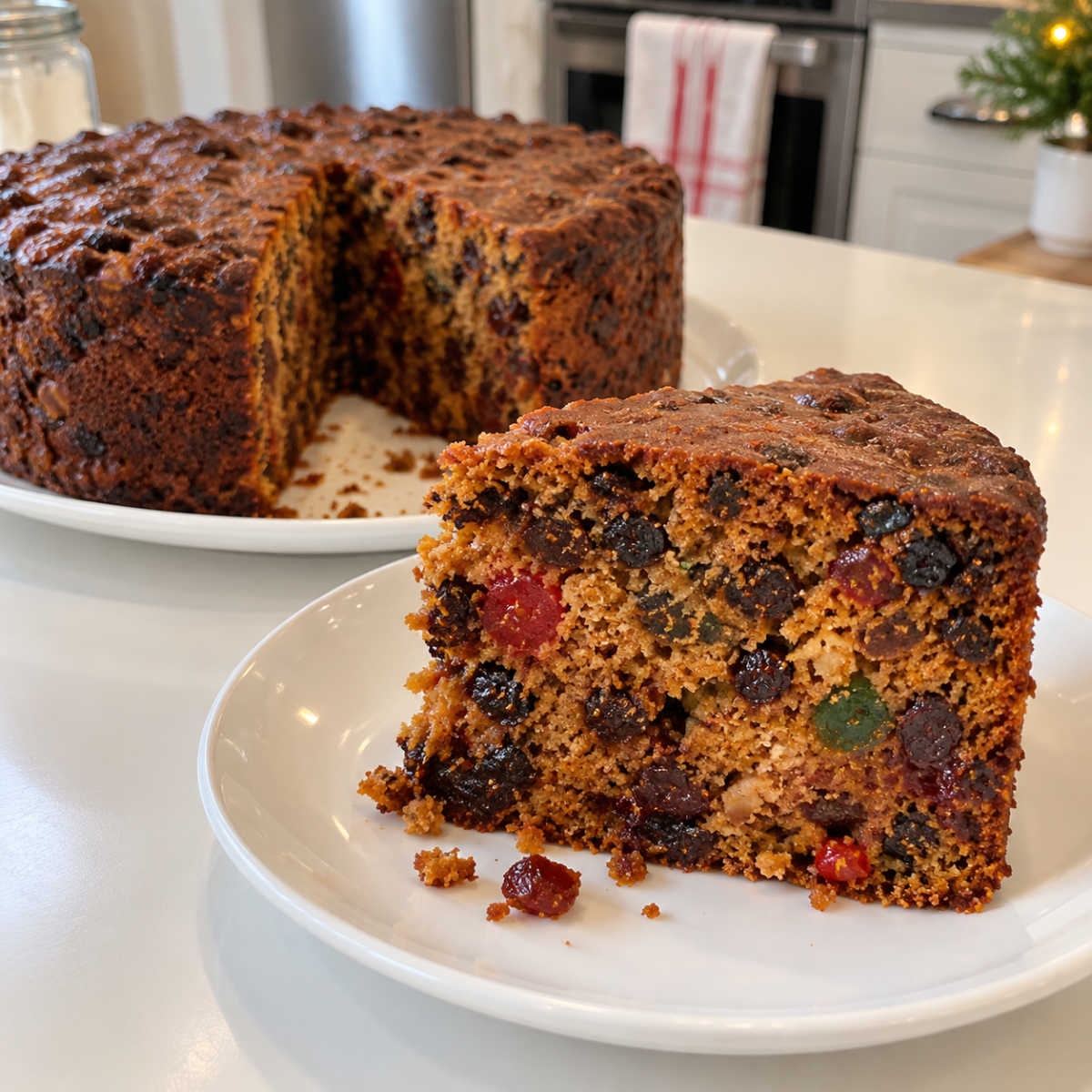
A Traditional British Christmas Cake Recipe is one of the most treasured holiday bakes in Britain. Rich, dense, fruity, warmly spiced, and traditionally finished with brandy, this classic Christmas cake is designed to be prepared well before the holiday so the flavors have time to deepen. Packed with currants, raisins, sultanas, candied peel, cherries, warm spices, and brown sugar, every slice delivers the unmistakable taste of an old-fashioned British Christmas.
Although the ingredient list may look long, the actual method is surprisingly straightforward. The key is preparation, gentle mixing, and a long, slow bake. This type of fruitcake can also be made weeks ahead and periodically “fed” with brandy, making it an especially practical dessert for busy holiday entertaining. The reference recipe uses a low oven temperature and a long baking time to help the dense fruit-filled batter cook evenly without burning around the edges.
Table of Contents
Why This Traditional British Christmas Cake Recipe Is So Special
Unlike a light sponge cake, a British Christmas cake is intentionally dense and luxurious. Dried fruits make up a large portion of the mixture, creating a moist texture and concentrated sweetness in every bite.
Warm cinnamon, nutmeg, and traditional mixed spice give the cake its cozy holiday aroma, while lemon zest brightens the rich mixture. Brandy adds another layer of flavor and helps the cake develop its characteristic mature taste as it rests.
One of the greatest advantages of this Traditional British Christmas Cake Recipe is that it is perfect for making ahead. Traditionally, Christmas cake may be baked several weeks before the holiday and fed periodically with brandy as it matures. The reference recipe notes that it can be prepared as much as two months ahead.
The result is a festive centerpiece that tastes even better after resting.
What Goes Into a Classic British Christmas Cake
The ingredients work together to create the rich flavor and dense texture associated with traditional English fruitcake.
- Currants: Provide concentrated sweetness and a slightly tangy dried-fruit flavor.
- Sultanas: These golden raisins add sweetness and a softer, plumper texture.
- Raisins: Bring familiar fruity richness and moisture to the cake.
- Mixed candied peel: Adds little bursts of citrus flavor and traditional British fruitcake character.
- Glacé cherries: Provide sweetness, color, and a pleasantly chewy texture.
- All-purpose flour: Gives the cake its structure and helps keep the fruit suspended throughout the batter.
- Salt: Balances the sweetness and strengthens the other flavors.
- Mixed spice: Adds the warming aroma associated with classic British holiday baking.
- Ground cinnamon: Gives the fruitcake gentle warmth and sweetness.
- Freshly ground nutmeg: Adds a deeper, aromatic spice note.
- Butter: Creates richness and contributes to the tender crumb.
- Soft brown sugar: Adds sweetness, moisture, and subtle caramel notes.
- Lemon zest: Brightens the dense fruit mixture with fresh citrus fragrance.
- Eggs: Bind the ingredients together and provide structure.
- Brandy: Adds warmth and complexity while also being traditionally used to feed the cake during maturation.
These ingredients closely reflect the classic combination used in the source recipe.
Ingredient Swaps for Your Christmas Fruitcake
A Traditional British Christmas Cake Recipe can be adapted without completely losing its character.
For a brighter citrus flavor, replace lemon zest with freshly grated orange zest. Orange pairs beautifully with raisins, cherries, cinnamon, and nutmeg.
You can also add finely chopped almonds if you enjoy a nutty Christmas fruitcake. The mild almond flavor complements the dried fruit without overpowering the spices.
If you prefer an alcohol-free version, replace the brandy with orange juice or apple juice. The reference recipe specifically suggests fruit juice as an alternative for an alcohol-free cake.
Keep in mind that a cake made without brandy will develop differently during storage, so it is better suited to making closer to the day you plan to serve it.
How to Make a Traditional British Christmas Cake Recipe
- Prepare your oven and cake pan. Heat the oven to a low temperature of 300°F or 150°C. Line a deep 9-inch cake pan generously with a double layer of parchment or greaseproof paper. The reference method also recommends insulating the outside of the pan with paper to protect the cake during its long bake.
- Combine the dried fruits. Place the currants, sultanas, raisins, finely chopped candied peel, and halved glacé cherries in a large mixing bowl. Add the flour, salt, mixed spice, cinnamon, and nutmeg. Toss until the fruits are evenly coated.
- Cream the butter and sugar. In a separate large bowl, beat the softened butter with the soft brown sugar until lighter and fluffy. This creates a smoother base for the cake batter.
- Add the citrus zest. Stir the lemon zest into the creamed butter mixture so its fragrant oils are evenly distributed.
- Incorporate the eggs gradually. Add the lightly beaten eggs little by little, mixing thoroughly after each addition. Adding eggs too quickly can cause the mixture to curdle. If that happens, mixing in a small spoonful of flour can help bring it back together, as suggested in the original method.
- Fold in the fruit mixture. Add about half of the flour-and-fruit mixture to the wet ingredients and fold gently. Add the remaining mixture and continue folding until everything is evenly distributed.
- Add the brandy. Stir the brandy through the batter until incorporated. Avoid overmixing once the flour has been added.
- Fill the prepared pan. Spoon the thick batter into the lined cake pan. Press it gently into the corners to eliminate large air pockets, then smooth the surface. Make a shallow dip in the center with the back of a spoon. This helps create a flatter surface as the cake rises.
- Bake slowly. Place the cake in the lower portion of the oven and bake for approximately 4 1/2 hours. Because this Traditional British Christmas Cake Recipe contains a large amount of fruit and sugar, low and slow baking helps prevent the exterior from becoming overcooked before the center is ready. If the top becomes too brown during baking, protect it with parchment paper.
- Check for doneness. Insert a thin skewer or knife into the center. It should come out clean rather than coated in wet batter. The finished cake should also look deeply browned and feel firm.
- Cool completely. Allow the cake to cool in its pan on a wire rack for about an hour before carefully removing it. Leave it until completely cold before feeding or wrapping.
- Feed the Christmas cake. Prick small holes over the surface with a clean skewer and drizzle brandy slowly over the cake. For a matured traditional cake, this process can be repeated periodically before Christmas. The source recommends feeding it approximately every two weeks.
Secrets for the Best British Christmas Fruitcake
Accurate preparation is particularly important with this recipe. Weigh and organize everything before beginning because the batter is thick and contains a large amount of fruit.
Consider soaking the dried fruit in a little brandy before making the cake. An overnight soak can make the dried fruit plumper and contribute additional moisture, a variation also recommended by the reference recipe.
Do not increase the oven temperature to shorten the cooking time. The dense center needs several hours to bake properly. A hotter oven can darken or burn the edges while leaving the middle undercooked.
Avoid repeatedly opening the oven door. Temperature fluctuations can affect how evenly such a heavy cake bakes.
Finally, let the cake cool completely before wrapping it. Trapping steam inside the wrapping can negatively affect both its texture and storage quality.
How to Store and Mature Traditional Christmas Cake
Proper storage is one reason a Traditional British Christmas Cake Recipe works so well for holiday planning.
Once completely cooled and fed, wrap the cake securely in parchment or greaseproof paper and keep it in an airtight container. Store it in a cool, dry place until you are ready to decorate or serve it.
If you are feeding the cake with brandy, unwrap it periodically, prick the surface, add a small amount of brandy, and wrap it again carefully.
Christmas cake can also be frozen. According to the reference recipe, properly wrapped cake or individual slices can be frozen for up to three months. It recommends wrapping well before freezing and thawing the wrapped cake at room temperature.
Decorating Your Traditional British Christmas Cake Recipe
The baked fruitcake can be served simply, but traditional Christmas presentation often makes it even more festive.
A classic approach is to cover the matured cake with marzipan before adding a layer of royal icing or fondant. The marzipan provides a smooth surface and complements the sweet dried-fruit filling.
For something easier, leave the cake undecorated and dust it lightly before serving, or add a simple icing finish.
You can also decorate the top with nuts, dried fruit, sugared cranberries, citrus peel, or understated Christmas decorations.
Because this Traditional British Christmas Cake Recipe is already packed with flavor, elaborate frosting is optional rather than essential.
Serving Ideas for a Rich Christmas Fruitcake
Cut the cake into relatively small slices because traditional British fruitcake is much richer than an ordinary sponge cake.
Serve it with hot tea or coffee after Christmas dinner, or add it to a holiday dessert board alongside shortbread, mince pies, chocolates, and seasonal fruit.
For a distinctly British-style combination, try serving a slice with a small piece of mature cheese. The contrast between salty cheese and sweet dried fruit can work surprisingly well.
The cake is also excellent on its own because the dried fruits, spices, brown sugar, citrus, and brandy provide plenty of complexity without additional toppings.
British Christmas Cake vs. Regular Fruitcake
British Christmas cake and fruitcake are closely related, and the terms may sometimes describe very similar cakes. Both typically contain generous quantities of dried or candied fruit and warming spices.
However, the traditional British version is often associated with an especially dense, moist texture and an extended maturation period. It may also be finished with marzipan and icing for Christmas.
The reference source explains that British Christmas cake and fruitcake can be very similar, while noting that British Christmas cake is commonly a moist, dense fruitcake decorated for the festive season.
That long resting period is one of the defining features of a classic Traditional British Christmas Cake Recipe. The flavors gradually become more harmonious, giving the cake its distinctive richness.
Make Christmas Baking Easier by Planning Ahead
Christmas is already a busy season, so a dessert you can prepare weeks in advance is particularly useful. Instead of baking everything during the final days before the holiday, make your Traditional British Christmas Cake Recipe early, wrap it carefully, and allow it to mature.
When Christmas arrives, most of the work is already finished. You only need to decorate the cake, slice it, and serve.
With its dense dried-fruit filling, fragrant holiday spices, buttery crumb, citrus aroma, and traditional brandy finish, this Traditional British Christmas Cake Recipe brings classic British holiday baking to the table. It takes patience rather than complicated technique, and the reward is a rich Christmas centerpiece designed for sharing throughout the festive season.
A Traditional Christmas Cake Worth Making Every Year
This Traditional British Christmas Cake Recipe is a wonderful way to bring a little British holiday tradition into your home. With its rich combination of currants, raisins, candied peel, cherries, warm spices, and brandy, every slice is full of festive flavor.
The best part is that you can prepare this cake well ahead of Christmas, giving the ingredients plenty of time to develop their flavors. Whether you decorate it with traditional marzipan and icing or enjoy it just as it is, this homemade fruitcake makes a beautiful addition to your holiday dessert table.
Serve it with a cup of tea or coffee, share it with family and friends, and enjoy a classic Christmas dessert that never goes out of style.
Frequently Asked Questions
1. How Far in Advance Can I Make a Traditional British Christmas Cake?
You can make a Traditional British Christmas Cake Recipe up to two months before Christmas. Preparing it early gives the dried fruits, spices, and brandy time to develop a deeper flavor. Wrap the completely cooled cake in parchment paper and keep it in an airtight container in a cool, dry place. If you prefer, you can also make it closer to Christmas, although it will have less time to mature.
2. Do I Have to Feed Christmas Cake With Brandy?
No, feeding the cake with brandy is traditional but optional. It helps maintain moisture and develops the rich flavor associated with a matured British Christmas cake. If you prefer an alcohol-free version, you can replace the brandy with apple juice or fresh orange juice. Keep in mind that an alcohol-free cake is better made closer to serving time and should be stored more conservatively.
3. How Do I Know When Traditional British Christmas Cake Is Fully Baked?
A traditional British fruitcake takes approximately 4 1/2 hours to bake at 300°F (150°C). The top should be a deep golden brown, and a thin skewer inserted into the center should come out clean. If wet batter sticks to the skewer, return the cake to the oven and continue baking, checking periodically. Avoid increasing the oven temperature because the dense fruit mixture needs a slow, even bake.
More Relevant Recipes
- Easy Heaven On Earth Cake with Cherry and Vanilla Cream
- Easy Halloween Puppy Chow Chex Mix for Parties
- Easy Christmas Crack with Pretzels
Traditional British Christmas Cake Recipe
- Total Time: 6 hours 15 minutes
- Yield: 12 to 16 servings
- Diet: Vegetarian
Description
A rich and festive Traditional British Christmas Cake Recipe packed with currants, sultanas, raisins, candied peel, cherries, warm spices, and brandy. This classic British fruitcake is slowly baked for a moist, dense texture and can be made weeks ahead so the flavors deepen before Christmas.
Ingredients
- 3 1/2 cups (525 g) currants
- 1 1/2 cups (225 g) golden raisins or sultanas
- 1 1/2 cups (225 g) raisins
- 3/4 cup (110 g) mixed candied peel, finely chopped
- 1 cup glacé or candied cherries, halved
- 2 1/3 cups (300 g) all-purpose flour
- 1 pinch salt
- 1/2 teaspoon mixed spice
- 1/2 teaspoon ground cinnamon
- 1/2 teaspoon freshly ground nutmeg
- 10 ounces (300 g) butter, slightly softened
- 1 1/3 cups (300 g) soft brown sugar
- Zest of 1/2 lemon
- 6 large eggs, lightly beaten
- 3 tablespoons brandy, plus extra for feeding the cake
Instructions
- Preheat the oven to 300°F (150°C). Line a deep 9-inch cake pan with two layers of parchment paper.
- In a large bowl, combine the currants, sultanas, raisins, candied peel, cherries, flour, salt, mixed spice, cinnamon, and nutmeg.
- In a separate large bowl, cream the softened butter and brown sugar until light and fluffy. Mix in the lemon zest.
- Gradually add the beaten eggs to the butter mixture, beating well after each addition. If the mixture begins to curdle, mix in a tablespoon of the measured flour mixture.
- Gently fold half of the fruit and flour mixture into the butter mixture. Fold in the remaining mixture until evenly combined.
- Stir in 3 tablespoons of brandy until incorporated.
- Spoon the thick batter into the prepared cake pan, pressing it gently to remove air pockets. Smooth the top and make a slight dip in the center.
- Place the pan in the lower part of the oven and bake for about 4 hours 30 minutes. If the top browns too quickly, cover it loosely with parchment paper after about 2 hours 30 minutes.
- Check the cake by inserting a skewer or thin knife into the center. It should come out clean. If wet batter remains, continue baking until fully cooked.
- Cool the cake in the pan on a wire rack for about 1 hour, then remove it from the pan and allow it to cool completely.
- Once cool, prick the surface with a skewer and slowly drizzle 2 to 3 tablespoons of brandy over the cake. Repeat the feeding process approximately every two weeks until Christmas if desired.
- Wrap the cooled cake securely in parchment paper and store it in an airtight container in a cool, dry place until ready to decorate and serve.
Notes
- Prepare and weigh all ingredients before mixing because the batter is very thick.
- For extra moisture and flavor, soak the dried fruits in a little additional brandy overnight before making the cake.
- Do not increase the oven temperature to shorten the baking time. A slow bake helps the dense center cook evenly without burning the outside.
- Avoid opening the oven door frequently during baking.
- For an alcohol-free version, replace the brandy with apple juice or fresh orange juice.
- Orange zest can be substituted for lemon zest for a slightly different citrus flavor.
- The cake can be made several weeks before Christmas and fed periodically with brandy as it matures.
- Once completely cooled, store the cake wrapped in parchment paper inside an airtight container.
- The cake can be frozen for up to 3 months when securely wrapped.
- Prep Time: 45 minutes
- Cook Time: 4 hours 30 minutes
- Category: Desserts
- Method: Baking
- Cuisine: British
Nutrition
- Serving Size: 1 slice
- Calories: 585 kcal
- Sugar: 75 g
- Sodium: 168 mg
- Fat: 17 g
- Saturated Fat: 10 g
- Unsaturated Fat: Not specified
- Trans Fat: Not specified
- Carbohydrates: 107 g
- Fiber: 4 g
- Protein: 7 g
- Cholesterol: 108 mg