
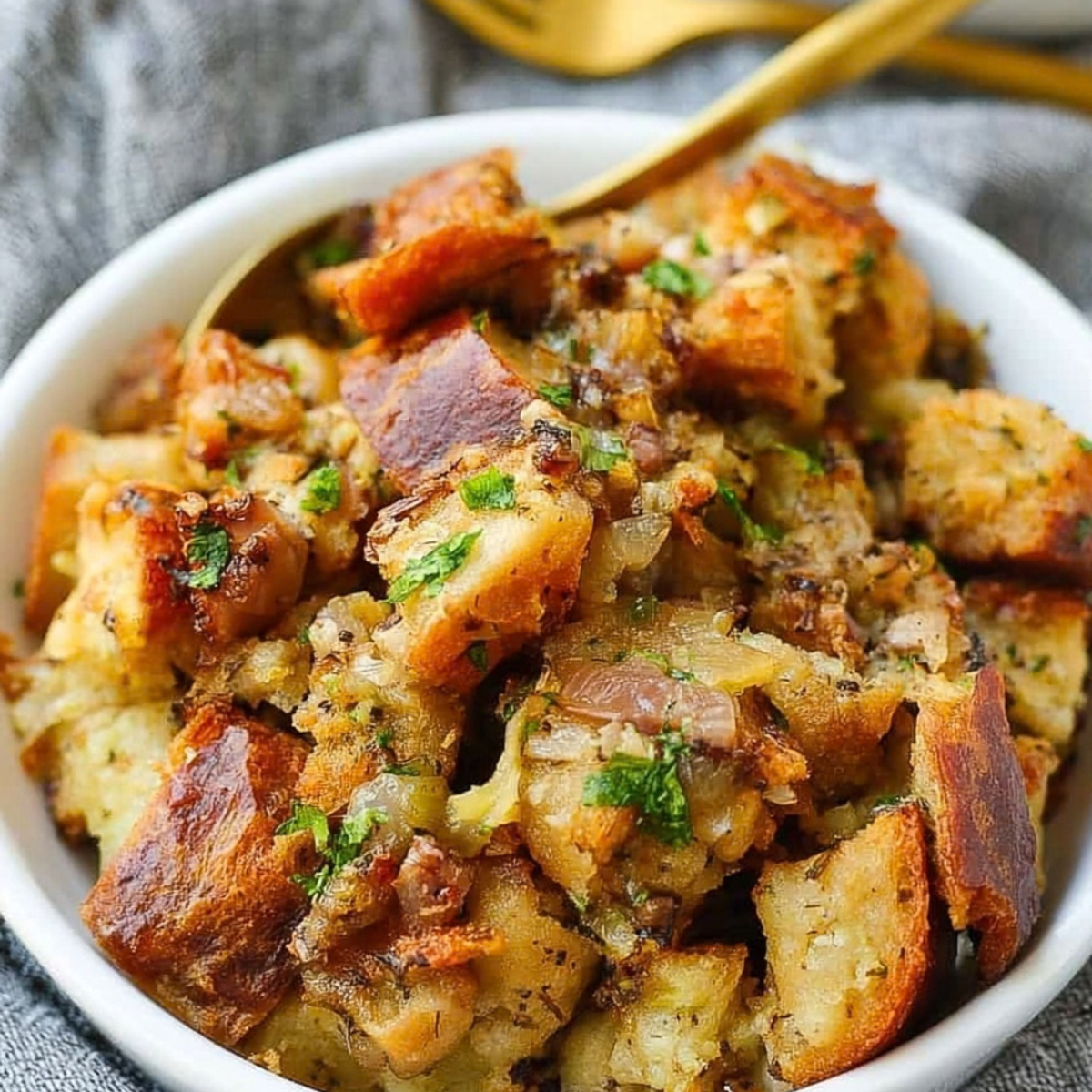
This Thanksgiving Stuffing recipe brings everything you want to the holiday table: crisp golden edges, a tender and savory center, fresh herbs, buttery bread, and smoky bacon in every bite. Instead of relying on boxed stuffing mix, this homemade version starts with toasted bread and simple aromatics for richer flavor and a much better texture.
The beauty of this easy Thanksgiving side dish is its balance. Dry bread absorbs flavorful chicken stock without becoming mushy, while onion, celery, garlic, rosemary, and parsley give the stuffing its classic holiday aroma. Bacon adds an extra savory layer, and butter helps create that irresistible golden top.
Inspired by the method from Natasha’s Kitchen, this version is baked separately in a casserole dish. That makes serving easier and gives the Thanksgiving Stuffing recipe a crisp surface while keeping the inside moist and tender.
Table of Contents
Why This Thanksgiving Stuffing Recipe Works So Well
A memorable stuffing needs more than seasoned bread. Texture is just as important as flavor, and this recipe is designed to deliver both.
Toasting the bread before adding the liquid helps it maintain its structure. The cubes absorb chicken broth, butter, bacon drippings, and seasonings while remaining pleasantly chewy instead of turning into a soft paste.
Baking the stuffing covered at first allows the center to heat evenly and stay moist. Removing the foil toward the end exposes the bread to the oven’s dry heat, creating a crisp, golden-brown crust.
This Thanksgiving Stuffing recipe is also convenient for holiday cooking because several components can be prepared ahead. That means less chopping and rushing while the turkey, gravy, mashed potatoes, and other Thanksgiving dishes compete for attention.
Ingredients for Homemade Thanksgiving Stuffing
The ingredients are simple, but each one has an important role in creating classic homemade stuffing.
- Day-old bread: Forms the base of the stuffing and absorbs the broth, butter, and seasonings while maintaining a hearty texture.
- Bacon: Provides smoky, savory flavor and flavorful drippings for cooking the vegetables.
- Unsalted butter: Adds richness and moisture while helping the top become beautifully golden.
- Yellow onions: Bring sweetness and aromatic depth to the bread mixture.
- Celery: Adds traditional stuffing flavor along with a subtle fresh crunch.
- Fine sea salt: Enhances the flavors of the bread, vegetables, herbs, and broth.
- Freshly cracked black pepper: Provides gentle warmth and balances the richness of the butter and bacon.
- Flat-leaf parsley: Adds freshness and a light herbal note.
- Fresh rosemary: Gives the stuffing its distinctive holiday aroma.
- Garlic: Adds savory depth without overpowering the traditional Thanksgiving flavors.
- Low-sodium chicken stock: Moistens the toasted bread and distributes savory flavor throughout the casserole.
- Eggs: Help bind the bread mixture together and give the center a light, cohesive texture.
The original recipe uses roughly 12 to 14 cups of cubed bread, 6 ounces of bacon, 12 tablespoons of butter, 2 medium onions, 3 celery stalks, 4 garlic cloves, 2 cups of stock, and 2 eggs, with parsley, rosemary, salt, and pepper for seasoning. It makes approximately 12 servings.
Easy Substitutions for Thanksgiving Dressing
One advantage of homemade stuffing is how easily you can adapt it.
Sourdough is particularly good because its chewy structure stands up well to broth, but French bread, rustic white bread, ciabatta, sandwich bread, focaccia, cornbread, or a combination can work.
For gluten-free stuffing, substitute a sturdy gluten-free loaf and dry it thoroughly before assembling the dish.
Pancetta can replace bacon. Cooked sausage is another flavorful option if you prefer sausage stuffing. For a vegetarian version, leave out the bacon and use vegetable stock instead of chicken broth.
Sage and thyme are excellent additions or substitutes for rosemary. Poultry seasoning can also provide that familiar Thanksgiving dressing flavor.
How to Make This Thanksgiving Stuffing Recipe
Making homemade stuffing is straightforward when you break the process into a few simple stages.
- Prepare the oven and casserole dish. Preheat your oven to 350°F. Grease a 9-by-13-inch baking dish with butter and set it aside while you prepare the stuffing.
- Dry the bread cubes. Spread the cubed bread in an even layer on a large rimmed baking sheet. Bake for approximately 12 to 15 minutes, or until the pieces feel dry and crisp like croutons. Very fresh bread may require another 5 to 10 minutes. Transfer the toasted bread to a large mixing bowl.
- Cook the bacon. Place the chopped bacon in a large skillet over medium heat. Cook until browned and crisp. Remove it with a slotted spoon, leaving the flavorful drippings in the skillet, and add the bacon to the toasted bread.
- Soften the aromatics. Melt 8 tablespoons of butter into the bacon drippings. Add the finely chopped onions, celery, minced garlic, and rosemary. Cook for approximately 6 to 8 minutes, stirring regularly, until the onions and celery are very soft.
- Season the vegetable mixture. Stir the fresh parsley, salt, and black pepper into the skillet. Pour everything over the toasted bread and bacon, then gently toss to distribute the vegetables and herbs.
- Add the broth gradually. Pour about half of the chicken stock over the bread mixture and toss. Adding the liquid gradually gives you better control over the texture.
- Add the eggs and remaining stock. Whisk the eggs together with the remaining chicken stock in a separate bowl. Pour this mixture over the bread and toss until the cubes are evenly moistened.
- Transfer the stuffing to the baking dish. Spoon the mixture into the prepared casserole dish without packing it down too firmly. Dot the surface with the remaining butter.
- Bake covered. Cover the casserole tightly with foil and bake at 350°F for about 40 minutes. This stage heats the stuffing throughout while retaining moisture.
- Create the crispy top. Remove the foil and continue baking for approximately 30 to 40 minutes. The Thanksgiving Stuffing recipe is ready when the surface is crisp and golden and the center reaches 165°F.
Allow the stuffing to rest briefly before serving so the texture can settle.
How to Get Crispy Thanksgiving Stuffing Every Time
The bread is one of the most important parts of this recipe. Fresh, soft bread absorbs liquid quickly and can become soggy. Day-old bread naturally contains less moisture, making it a better starting point.
Even when using stale bread, toasting the cubes is worthwhile. You want them dry and crisp before adding the broth.
Avoid pouring all the liquid onto one area. Add the broth gradually and toss carefully so the bread absorbs moisture evenly.
For a crispier Thanksgiving Stuffing recipe, use a wide casserole dish rather than a deep baking vessel. More exposed surface area means more golden, crunchy bread.
Don’t skip the uncovered portion of the baking time. The initial covered bake keeps the center tender, while the uncovered bake creates the contrasting crisp top.
An instant-read thermometer is useful for checking doneness. The center should reach 165°F.
Stuffing vs. Dressing: What’s the Difference?
The terms stuffing and dressing are often used interchangeably, particularly around Thanksgiving.
Traditionally, stuffing refers to a bread mixture cooked inside the cavity of a turkey or other poultry. Dressing generally refers to a similar mixture baked separately in a casserole dish.
This Thanksgiving Stuffing recipe uses the casserole method, which has several practical advantages. The turkey can roast without a dense filling slowing the cooking process, and the stuffing gets significantly more crispy surface area.
It is also easier to prepare, serve, store, and reheat a casserole of stuffing.
If you choose to cook stuffing inside a turkey, food safety becomes especially important because poultry juices come into contact with the bread mixture. The center of the stuffing must reach 165°F before serving.
Make-Ahead Thanksgiving Stuffing Tips
Holiday meals are much easier when some of the work happens before Thanksgiving Day.
The bread can be cubed and dried 1 to 3 days ahead. Once completely cool, keep the dried cubes at room temperature in a suitable container.
You can also chop the vegetables, herbs, and bacon ahead. The sautéed bacon and vegetable mixture can be prepared about a day in advance, cooled completely, covered, and refrigerated.
For an even bigger head start, bake the entire Thanksgiving Stuffing recipe, cool it promptly, and refrigerate it. Properly stored cooked stuffing can be kept in the refrigerator for up to four days.
When you’re ready to serve it, reheat the stuffing at 350°F until hot throughout. Individual portions can also be reheated in an air fryer for roughly 6 to 7 minutes, which is particularly good for restoring crispy edges.
What to Serve with Thanksgiving Stuffing
Naturally, roast turkey is the classic partner for homemade stuffing. Add turkey gravy and cranberry sauce, and you have some of the most recognizable flavors of Thanksgiving on one plate.
Mashed potatoes, green bean casserole, roasted carrots, sweet potato casserole, macaroni and cheese, Brussels sprouts, and roasted squash are all excellent sides to complete the holiday menu.
This savory bread stuffing isn’t limited to turkey, either. It pairs beautifully with baked ham, roast chicken, beef tenderloin, pot roast, prime rib, pork tenderloin, meatloaf, or lamb chops.
For leftovers, layer stuffing with sliced turkey, cranberry sauce, and gravy on sturdy bread. A warm Thanksgiving sandwich is one of the easiest ways to turn holiday leftovers into an entirely different meal.
Flavor Variations for This Thanksgiving Stuffing Recipe
Once you’re comfortable with the basic technique, there are plenty of ways to personalize your stuffing.
For a sausage stuffing, replace the bacon with browned breakfast or Italian sausage. Make sure the sausage is fully cooked before combining it with the bread.
For a more herb-forward dressing, add fresh sage and thyme alongside the parsley and rosemary. These herbs work particularly well with roast turkey and chicken.
Cornbread lovers can replace some or all of the regular bread with dried cornbread cubes. Cornbread creates a softer texture and slightly sweeter flavor.
For vegetarian Thanksgiving dressing, omit the bacon, sauté the vegetables entirely in butter or olive oil, and replace chicken stock with vegetable broth.
If you enjoy extra-crispy stuffing, spread the mixture in a slightly shallower casserole dish and allow the top to brown thoroughly during the final uncovered bake.
How to Store and Reheat Leftover Stuffing
Cool leftover stuffing promptly and transfer it to an airtight container or cover the casserole securely. Refrigerate it for up to four days.
For longer storage, freeze the cooked stuffing for up to three months. Thaw frozen stuffing overnight in the refrigerator before reheating.
To reheat a larger amount, place it in a 350°F oven for around 15 minutes or until thoroughly hot. Covering it initially can prevent excessive drying, while removing the cover for the final few minutes can restore the crisp surface.
Always heat leftovers until the center reaches 165°F.
A Classic Thanksgiving Side Worth Making From Scratch
A great Thanksgiving Stuffing recipe doesn’t need complicated ingredients. The combination of toasted bread, bacon, butter, onion, celery, garlic, fresh herbs, chicken stock, and eggs creates the comforting flavor people expect from a traditional holiday meal.
Drying the bread properly and baking the casserole in two stages are the keys to getting the texture right. You end up with crisp, buttery pieces across the surface and a tender, savory center underneath.
Better yet, this homemade Thanksgiving stuffing is flexible enough for different breads, herbs, proteins, and dietary needs, and much of the preparation can be handled ahead of time. Serve it beside roast turkey and gravy for Thanksgiving dinner, then save the leftovers for sandwiches the next day.
Thanksgiving Stuffing Recipe FAQs
Can I Prepare This Thanksgiving Stuffing Recipe Ahead of Time?
Yes. This Thanksgiving Stuffing recipe is an excellent make-ahead Thanksgiving side dish. You can dry and toast the bread cubes 1 to 3 days in advance and keep them at room temperature once completely cool.
The bacon, onions, celery, garlic, and herbs can also be cooked a day ahead and refrigerated in a covered container. This reduces preparation time when you’re busy cooking turkey and other holiday dishes.
You can also bake the stuffing ahead, refrigerate it for up to four days, and reheat it at 350°F until the center reaches 165°F. For the best texture, uncover the dish near the end of reheating so the top becomes crisp again.
What Is the Best Bread for Thanksgiving Stuffing?
Sourdough, French bread, rustic white bread, and ciabatta are all excellent choices for a Thanksgiving Stuffing recipe. Their sturdy texture allows them to absorb flavorful chicken stock and melted butter without immediately becoming mushy.
Whatever bread you choose, drying it properly is more important than choosing one specific variety. Day-old bread works particularly well, but fresh bread can be cubed and toasted at 350°F until completely dry and crisp.
You can also combine different breads for more interesting flavor and texture. Cornbread can be added for a slightly sweeter variation, while gluten-free bread works well when thoroughly dried before assembling the stuffing.
How Do You Keep Thanksgiving Stuffing From Getting Soggy?
Start with thoroughly dried bread cubes. Bread containing too much moisture cannot absorb the chicken broth, butter, and other flavorful ingredients without becoming overly soft.
Add the stock gradually rather than pouring it in all at once. The bread should be evenly moistened but shouldn’t be swimming in liquid.
Baking technique also matters. Keep the casserole covered during the first portion of cooking to maintain a tender center, then remove the foil so the top can become golden and crisp. This combination gives homemade Thanksgiving dressing its appealing contrast between a moist interior and crunchy edges.
More Relevant Recipes
- Easy Cheesy Zucchini Casserole with 4 Ingredients
- Easy Cucumber Chickpea Salad with Lemon Dressing
- Easy Tomato and Zucchini Ratatouille Recipe

Thanksgiving Stuffing recipe
- Total Time: 1 hour 45 minutes
- Yield: 12 servings
- Diet: Low Lactose
Description
This easy Thanksgiving Stuffing recipe combines toasted bread, crispy bacon, butter, onions, celery, garlic, fresh rosemary and parsley with savory chicken stock. Baked until tender in the center and golden and crispy on top, it is a flavorful homemade Thanksgiving side dish that can also be prepared ahead.
Ingredients
- 1 1/4 lb day-old bread, cut into 1/2 to 3/4-inch cubes (about 12-14 cups)
- 6 oz bacon, chopped into 1/4-inch pieces
- 12 tbsp unsalted butter, divided, plus more for greasing the baking dish
- 2 medium yellow onions, finely chopped (about 2 cups)
- 3 celery stalks, finely chopped (about 2 cups)
- 1 tsp fine sea salt, or to taste
- 1 tsp freshly cracked black pepper, or to taste
- 1/2 cup finely chopped fresh flat-leaf parsley
- 1 1/2 tbsp finely chopped fresh rosemary
- 4 garlic cloves, minced
- 2 cups low-sodium chicken stock, divided
- 2 large eggs
Instructions
- Preheat the oven to 350°F and grease a 9×13-inch casserole dish with butter.
- Spread the bread cubes on a large rimmed baking sheet. Bake for 12-15 minutes, or until completely dry and crisp. Fresh bread may need an additional 5-10 minutes. Transfer the toasted bread to a large mixing bowl.
- Heat a large skillet over medium heat. Cook the chopped bacon until browned and crisp. Remove it with a slotted spoon and add it to the toasted bread, leaving the bacon drippings in the skillet.
- Melt 8 tablespoons of butter into the bacon drippings. Add the onions, celery, garlic and rosemary. Cook for 6-8 minutes, stirring regularly, until the vegetables are very soft.
- Stir the parsley, salt and black pepper into the vegetable mixture. Pour the mixture over the toasted bread and bacon, then gently toss to combine.
- Slowly pour half of the chicken stock over the bread mixture and toss until evenly distributed.
- In a separate bowl, whisk the remaining chicken stock with the eggs. Pour it over the bread mixture and gently toss until evenly moistened.
- Transfer the stuffing to the prepared casserole dish. Dot the surface with the remaining 4 tablespoons of butter and cover the dish with foil.
- Bake covered at 350°F for 40 minutes. Remove the foil and continue baking for 30-40 minutes, or until the top is crisp and golden brown and the center reaches 165°F.
- Let the Thanksgiving stuffing rest briefly before serving warm.
Notes
- Day-old or stale bread works best because it absorbs the stock without becoming excessively soggy.
- Sourdough, French bread, rustic white bread, ciabatta or a combination of sturdy breads can be used.
- Dry the bread 1-3 days ahead to save time on Thanksgiving Day.
- Pancetta can replace bacon. Cooked sausage can also be used for a sausage stuffing variation.
- Add sage or thyme if you prefer a stronger traditional holiday herb flavor.
- Add the chicken stock gradually so you can control the moisture and avoid soggy stuffing.
- The stuffing is done when the top is golden and crisp and the center reaches 165°F.
- Cooked leftovers can be refrigerated for up to 4 days or frozen for up to 3 months.
- Reheat refrigerated stuffing at 350°F until the center reaches 165°F.
- Prep Time: 20 minutes
- Cook Time: 1 hour 25 minutes
- Category: Side Dish
- Method: Baking
- Cuisine: American
Nutrition
- Serving Size: 1 cup
- Calories: 324
- Sugar: 4 g
- Sodium: 682 mg
- Fat: 19 g
- Saturated Fat: 10 g
- Unsaturated Fat: 8 g
- Trans Fat: 0.5 g
- Carbohydrates: 26 g
- Fiber: 2 g
- Protein: 12 g
- Cholesterol: 71 mg